
神探伽利略
运营21年的济南柏宁水族广场将关停?商户在找新址,管理方说待定_我的网站

一 | 近日,有市民反映,已运营21年的济南柏宁水族宠物用品交易广场或将于10月底闭市。 这座陪伴泉城市民21年的老牌水族地标,如今正站在去留的十字路口。

二 | 商户们在去与留的焦灼中寻找退路,管理方回应“尚在商榷”。
Chinese experts noted that, similar to her ambiguous remarks at the memorial ceremony in Hiroshima, Takaichi stopped short of making a clear commitment to maintaining the Three Non-Nuclear Principles in the future, as her government's stance on nuclear issues has sparked concern and anger among the Japanese public. They also warned that, given Japan's lack of thorough reflection on its wartime aggression, Tokyo's moves to dilute the Three Non-Nuclear Principles should raise alarm across the international community.
"Our country firmly upholds the three non-nuclear principles, and under the pledge that 'Nagasaki shall be the last city to suffer a nuclear attack,' we are promoting realistic and practical initiatives toward the realization of a world without nuclear weapons," Takaichi claimed, according to the Japan Times.
But unlike previous prime ministers, many of whom had pledged that Japan would "continue to uphold" the principles, Takaichi merely described the government's current position without making an explicit commitment about the future, per the report.
As Hiroshima observed the 81st anniversary of the US atomic bombing of the city on Thursday, Takaichi also emphasized that Japan pledges to achieve a world free of nuclear weapons while upholding the Three Non-Nuclear Principles, despite Japanese media noting that she has left the door open for future revisions.
Takaichi's remarks in Hiroshima and Nagasaki that Japan upholds the three non-nuclear principles were largely seen as a reaffirmation of the country's existing policy position rather than a pledge to maintain the principles in the future, Liu Jiangyong, a professor at the Institute of International Studies at Tsinghua University, told the Global Times.
Liu said that currently, some Japanese officials' dangerous remarks on nuclear have sparked criticism among Japanese society. He pointed out that Takaichi only referred to Japan's current adherence to the principles, without explicitly committing to preserving them going forward. Her subsequent focus on broader goals such as achieving a "world without nuclear weapons" has further fueled questions over her actual policy intentions.
Japanese Defense Minister Shinjiro Koizumi claimed in an online program released in July that discussions on nuclear weapons were necessary to strengthen Japan's defense capabilities, according to Kyodo News. While acknowledging that the issue was difficult to discuss in Japan, he claimed it was something that "could not be avoided."
Opposition to the Takaichi administration's nuclear-related moves has emerged across Japan, including from local governments, media organizations and civil society groups.
According to statistics from the Japanese Diet, at least 128 local assemblies across the country had submitted written opinions to the central government or parliament between Takaichi's inauguration on October 21 last year and July 28 this year, calling for the country's Three Non-Nuclear Principles to be upheld, according to Xinhua News Agency.
In an interview with the AFP, 82-year-old Satoshi Tanaka, a campaigner who survived the 1945 attack on Hiroshima expressed frustration that current political leaders like Takaichi are focusing on military capacity at the expense of diplomacy.
"There is so much talk about national security. What about building peace through diplomacy?" he said.
Responding to a question concerning the Japanese authorities are rebuilding Japan's war machine, seeking to revise the Three Non-Nuclear Principles, and pursuing nuclear sharing with the US, even the possession of nuclear weapons, Chinese Foreign Ministry spokesperson Lin Jian said on Thursday that the devastation and tragedies brought by nuclear weapons should never repeat themselves. That said, the particular context of the nuclear explosions should all the more be remembered and the lessons of Japanese militarism's aggression and expansion must forever serve as an alarm.
The Tokyo's moves on nuclear policy have also raised concerns in the international community.
Russia considers the rhetoric of Japanese authorities regarding the need for Japan to revise its Three Non-Nuclear Principles provocative and unacceptable, Russian Ambassador to Japan Nikolai Nozdrev said in an interview with RIA Novosti, which was published on Saturday.
Responding to Koizumi's remarks on nuclear discussion, Nozdrev said "This is the first time in Japan's history, as the only country to have suffered atomic bombings in Hiroshima and Nagasaki, that a sitting defense minister has publicly called for lifting the 'taboo' on discussions related to nuclear weapons. We consider such rhetoric from official Tokyo provocative and absolutely unacceptable."
Japan has yet to fully reckon with its wartime aggression, thus any attempt by Tokyo to move toward acquiring nuclear weapons could pose serious risks to regional peace and global security, Lü Chao, an expert on the Korean Peninsula issue at the Liaoning Academy of Social Sciences, told the Global Times.
Such concerns have become more pronounced as Japan increasingly portrays China as a major security challenge while highlighting perceived threats from other countries, against such a backdrop, any further steps to dilute the three non-nuclear principles are likely to heighten concerns internationally, particularly among countries that suffered from Japanese aggression during World War II, said Lü.
。 管理方:合同10月底到期,去留仍存变数 “大约20多天前,我们突然得知了市场要关闭的消息。”经营水族店铺二十余年的王先生告诉记者。 8月23日下午,正值周末,市场内客流稀少,多处店面大门紧锁,卷帘门上贴着“招租”启事。据粗略统计,广场一、二层共设商铺69家,目前已有33家处于关门歇业状态。
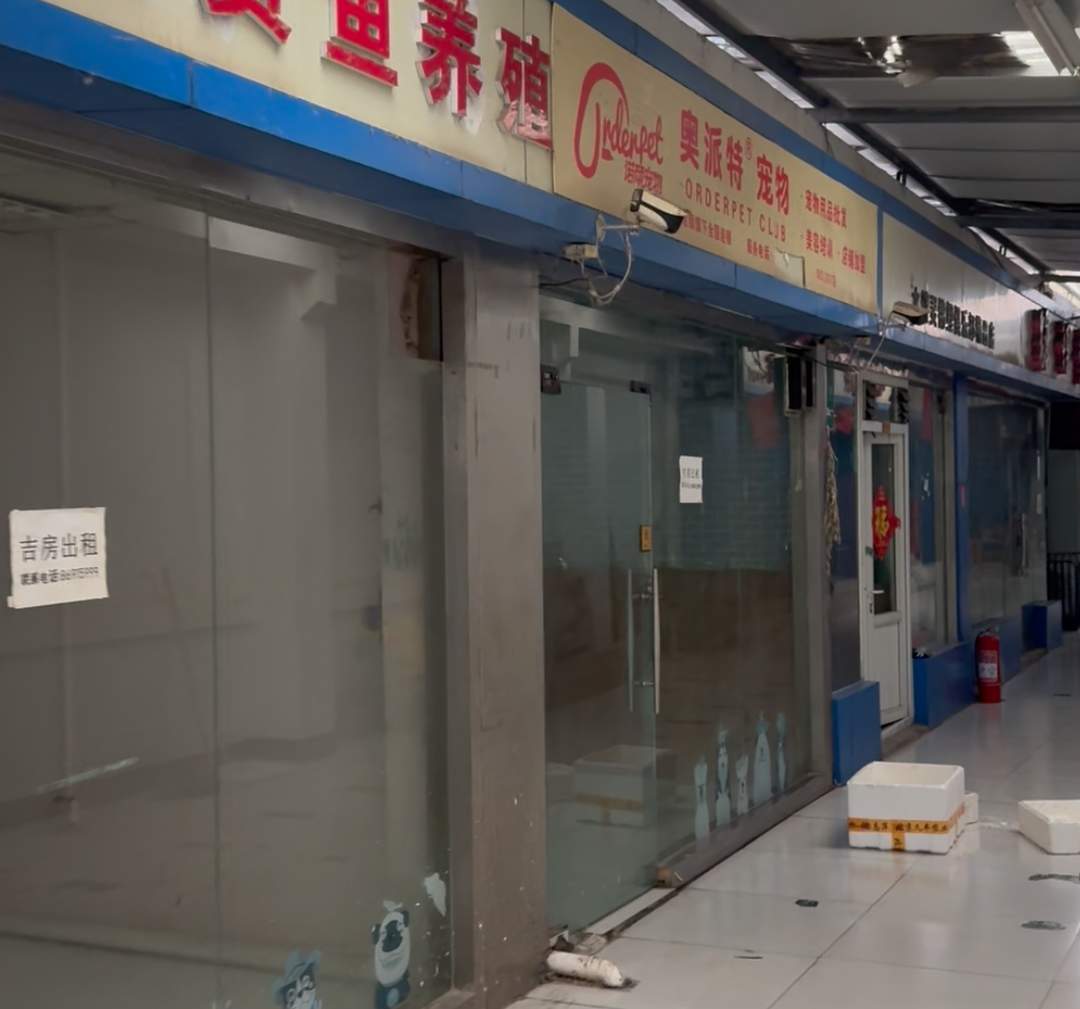 记者以商户身份致电“招租”广告上的电话,工作人员表示:“租的话只能租到10月份。”问及具体原因,对方直言:“有规划。”
8月24日,记者就广场是否关停一事再次向管理方核实,对方回应称:“目前还没完全确定。10月31日是合同到期日,如果没有变动,我们会延续经营,但延续时间尚不确定。” 近半店面已歇业,老商户面临搬迁难题
王先生的店铺面积达106平方米,两年前刚花重金重新装修过。“周边基本都是二十年的老街坊,以前极少有退租更替的。
记者以商户身份致电“招租”广告上的电话,工作人员表示:“租的话只能租到10月份。”问及具体原因,对方直言:“有规划。”
8月24日,记者就广场是否关停一事再次向管理方核实,对方回应称:“目前还没完全确定。10月31日是合同到期日,如果没有变动,我们会延续经营,但延续时间尚不确定。” 近半店面已歇业,老商户面临搬迁难题
王先生的店铺面积达106平方米,两年前刚花重金重新装修过。“周边基本都是二十年的老街坊,以前极少有退租更替的。
三 | ” 谈及经营现状,王先生叹了口气,坦言如今的营业额已断崖式跌至巅峰期的十分之一甚至二十分之一,“今天一整天营业额只有276元,算上房租和水电,连成本都保不住。

四 | ”店内近百个鱼缸的供氧、加温设备需要24小时不间断运转,高昂的固定开销让当下的坚守愈发艰难。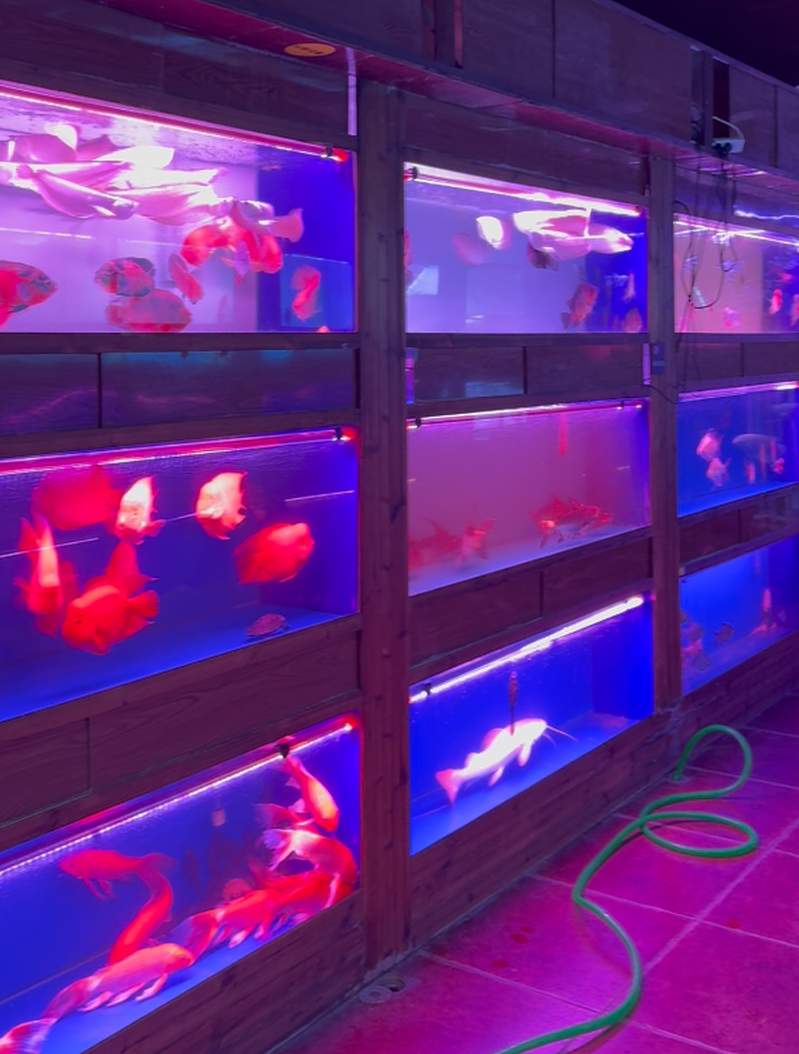 “以前周边摆地摊的小商贩都会来这儿批发,后来渠道变了,零散客流也越来越少。”同样在此坚守了二十多年的聂女士,眼下则面临着更加繁重的善后工作。 水族行业搬迁不同于普通零售,“大大小小的重型鱼缸怎么挪、活体水族怎么安全转运、新址水电线路怎么重新布设,都是难题。还没完全想好去哪,家里人今天下午已经先出去看新铺面了。”
真正让聂女士们犹豫的,不只是搬不动的鱼缸,更是这里二十多年攒下的人情和旧时光。 情怀难舍:鱼影里藏着济南人的旧时光
聂女士说,做水族这行,换了地方最怕老主顾断了线。在这座临湖而建的市场里,鱼游了二十余年,人也聚了二十余载。 泉城人爱水,也爱水里的生灵。
“以前周边摆地摊的小商贩都会来这儿批发,后来渠道变了,零散客流也越来越少。”同样在此坚守了二十多年的聂女士,眼下则面临着更加繁重的善后工作。 水族行业搬迁不同于普通零售,“大大小小的重型鱼缸怎么挪、活体水族怎么安全转运、新址水电线路怎么重新布设,都是难题。还没完全想好去哪,家里人今天下午已经先出去看新铺面了。”
真正让聂女士们犹豫的,不只是搬不动的鱼缸,更是这里二十多年攒下的人情和旧时光。 情怀难舍:鱼影里藏着济南人的旧时光
聂女士说,做水族这行,换了地方最怕老主顾断了线。在这座临湖而建的市场里,鱼游了二十余年,人也聚了二十余载。 泉城人爱水,也爱水里的生灵。

五 | 不少老济南人的童年记忆里,都有一只圆玻璃鱼缸。透过略带畸变的弧面玻璃,一尾红尾巴轻轻一摆,就是整个夏天的欢愉。

六 | 龙睛、红虎头、大水泡,当年大明湖西南门早市上的瓦盆里,游着最地道的市井烟火。相中了哪一条,摊主用细篾小网轻轻一抄,一两块钱,便能把这份“水灵”兜回家中。 自2005年底开业以来,柏宁水族广场便成了这份市井雅趣的延续地。 在市场一角,养鱼十余年的市民孙先生正在挑选水草。他家里养着几尾飘逸的“蝴蝶蓝”,上周刚买了一株造景水草,今天特意再来配个新色。“摆在缸里对称、好看,现在市场里不少店在打折,能捡个漏。” “二十多年的老市场了,关停了怪可惜的。

七 | ”谈及市场可能关停,孙先生又补了一句:“要是真搬了也没事,我都留着老板电话呢,到时候跟着地址找过去就是了。

八 | ” 只是对商户们来说,搬家不只是搬鱼缸,更是搬动一条条靠年月攒起来的老主顾关系。

九 | 无论最终迁往何方,这份浸润泉城岁月的市井人情,仍希望不会轻易断线。
Current article:http://rymf.zhenzongtingrangunhongqiusao.shop/list_0s3ts6/ndoxp.html
Published on:22:29:20
我的网站最近更新
- 诺基亚将在芬兰解雇350人
- 你我贷约定7月30日到账的9960安抚金至今仍未收到
- 五菱缤果S申报信息曝光 定位纯电小型SUV 比亚迪元UP同级
- AI如何真正成为企业生产力?构建坚实的数字基座是关键
- B站悄悄上线Steam账号展示功能
- 【仓单】8月26日上期所橡胶期货仓单较上一日下降110吨
- 英伟达 战略入股电力开发商!锁定AI工厂的“电力第一公里”
- 炫动冰雪 激情抚顺丨咔嚓!冬日氛围感,这里嘎嘎出片!
- 2025年淘宝京东618活动期间什么时候开始买苹果手机最便宜划算省钱?
- 米体:马竞询问戴维的情况,尤文若出售他将可以租借引进齐尔克泽
- 德天空:如果卢克巴留队,明夏解约金条款将降至6500万欧元
- 就在今天,永城街有序通车啦!
- 前英格兰门将:若加克波或迪亚斯离队,利物浦可引进三笘薰
- 辽宁大连发布暴雨橙色预警
- 【观点】广州期货:生猪现货走弱,维持谨慎看多观点
- “黑暗的一天”,两大政府机构拟裁员上千人!
- “다음 날 새벽에 숨진 듯”…‘허위 종결’ 등 의문점 여전
- 「素で驚きの声出た」25歳で10歳上俳優と結婚、第1子誕生〝雰囲気一変〟清野菜名の最新姿に「どうなってん!?」「ママになって…」「惹かれる」の声
- 抖音打击恶意营销号:某著名科技品牌长期遭负面信息攻击,涵盖产品事故现场、舆情争议等内容
- 哀悼,前辽足主帅维尔纳-洛兰特因病离世,享年76岁
- 小米玄戒O3芯片全面重构NPU架构:拥有200TOPS张量算力
- 珠海彩民喜中双色球二等奖122万
- 新闻分析:CBA顶薪球员的两难选择
- 突发!加州大学800余名教职工要求UCLA校长辞职,不满情绪或引发全美最大学术工会罢工
我的网站热门资讯
- 福蓉科技:定增申请获上交所受理
- 红利投资的本质:“稳定”和“大方”一样重要
- 女生质疑体考被压表大闹考场 山东官方通报
- マクドナルド、2月25日に価格改定。店頭価格を10~50円値上げ、一部商品をリニューアル
- 《It Ends》评测
- 太给国产长脸!中国军工埃及现场带货,埃及空军直呼大开眼界,豆莱说,原创 太给国产长脸!中国军工埃及现场带货,埃及空军直呼大开眼界
- 淘宝/京东618红包口令:好运红包7788,6月17日晚8点开始持续到6月18日24:00最便宜
- 小米官宣澎程 N90 全尺寸 SUV 转弯半径 5.95m,官方一镜到底实测视频公布
- AI创意视频|新式彩礼
- 企业与商会:要打造亲商环境 除简化监管程序 也应让申请和审批制度更透明
- 侯峰:拜登临走时,还对中国撂下一句话
- APEC《创新与数字化增强亚太区域粮食体系韧性原则文件》发布
- 外交部副部长苗得雨会见伊朗外交部副部长加里布阿巴迪
- 再添穿黄“新动脉” 济南跨黄通道布局进一步完善
- 什么样的退役,才算得上体面?
- 29년간 시민과 함께한 전동차
- 从SEO到GEO:企业网站内容优化需要补齐哪些基础工作
- Filmfare Flashback: Raj Kapoor’s Memorable Win at The 9th Filmfare Awards
- 1月29日在“中国父母”的“女儿版”中更新:快速抚养女孩
- 新车 | 今年发布,新款本田CR-V将推出越野版,竞争丰田RAV4
- 斥资4200万欧元 西汉姆签下意甲第六号射手
- 济南市工商联第十六次代表大会开幕 刘强王随莲讲话 杨峰出席
- 中原再担保集团股份有限公司董事长薛怀宇接受审查调查
- 一学生在学校跑步时猝死,法院判决